A storefront that got 20% better at its job

We lifted revenue per session about 20% and held it while traffic doubled.
We never touched the price.

BY NICHOLAS F. HERNANDEZ,
HEAD OF GROWTH, PB+J


When traffic doubles, most brands assume revenue takes care of itself.

Call it Traffic Worship. Buy more visitors, pour them into the same leaky funnel, act surprised when each new dollar of ad spend works a little less hard than the last. You did not scale. You paid to fill a bigger bucket with the same holes.

The brands that scale profitably treat the storefront like a product with its own roadmap. Obsessive checkout tuning. Fitment tools that make a $379 part feel safe to buy. They build conversion on purpose instead of hoping the traffic converts itself.

Here is how we took one heritage towing and suspension parts brand and made its storefront about 20% better at turning visitors into revenue, then held it there while traffic more than doubled.

The Brief

The brand sells fitment-critical suspension parts at a ~$379 average order.

The brand sells fitment-critical suspension parts at a ~$379 average order. A heritage name in towing and truck suspension, technical product, high consideration. The buyer has to be sure the part fits their exact truck before the card comes out. Through 2025 and into 2026 it was scaling paid hard, and first-half traffic nearly doubled year over year.

At roughly 1% conversion, which is normal for a technical, high-ticket cart, a small percentage gain is a large pile of money. But only if it survives the flood of colder, newer paid traffic pouring in. The rate had to climb and hold while the mix got harder.

And a hard rule: no discounting. The brand does not compete on price and was not about to start. So every point of conversion had to come out of the experience itself. Fitment confidence. Cart mechanics. Page order. A coupon was never on the table

 
A collage of a vintage truck driving forward with oversized pink flowers and $100 america bills behind the car. All of this is on top of a blue tilted background.

 THE EXECUTION


The call, heading into Q4 2025, was to double down on CRO and email and multiply what paid was already buying. Not one heroic redesign. A continuous test program, run by our CRO lead and a developer on our team, with an A/B testing platform and a smart-cart app on the bench. The work was specific, and it was dated.


Installed session-recording analytics and built a dedicated landing page for one high-intent product line, tested against the existing flagship product page (late 2025).

Tested a free-shipping message at checkout. Worth +5% desktop revenue per visitor (Oct 2025).

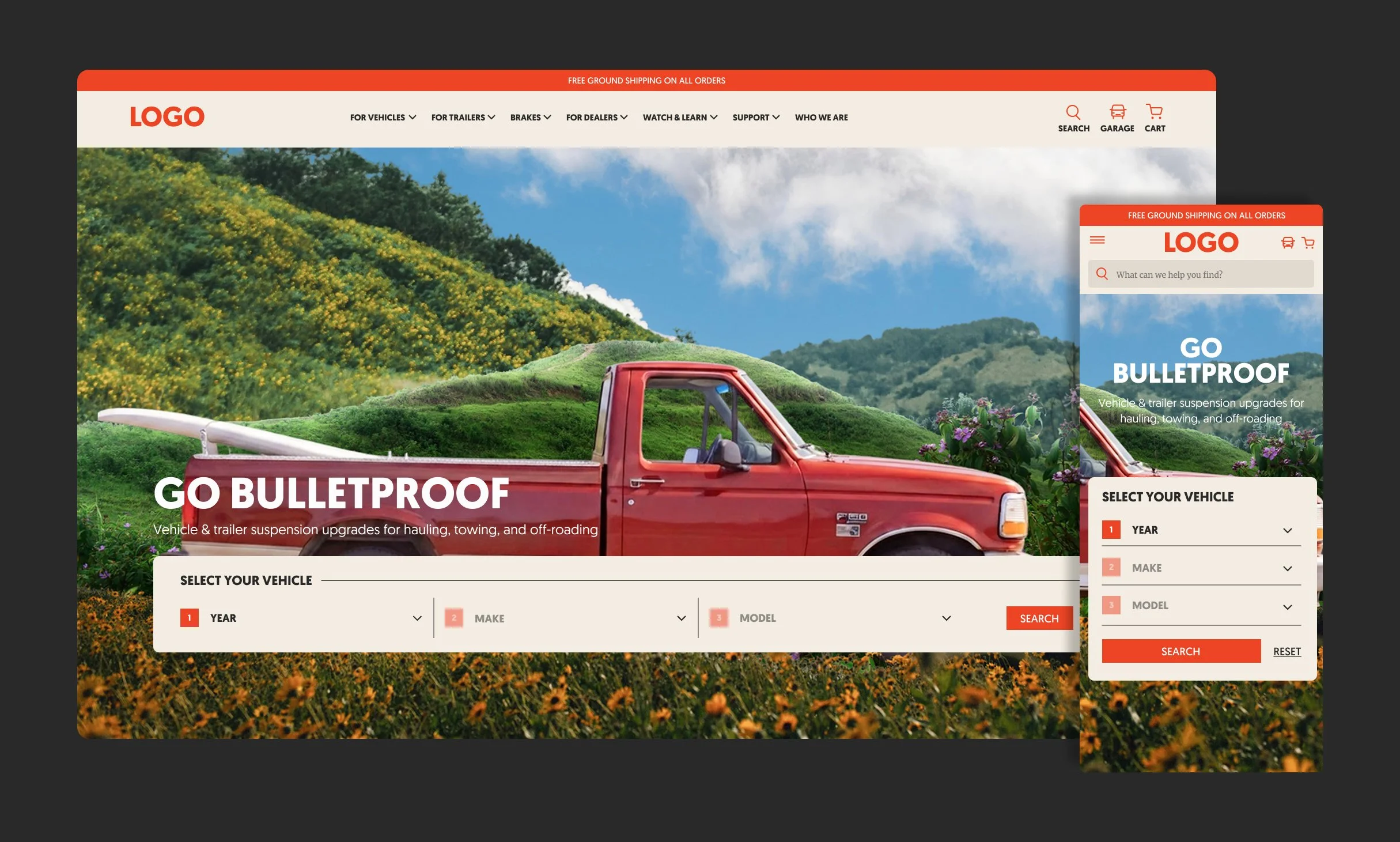
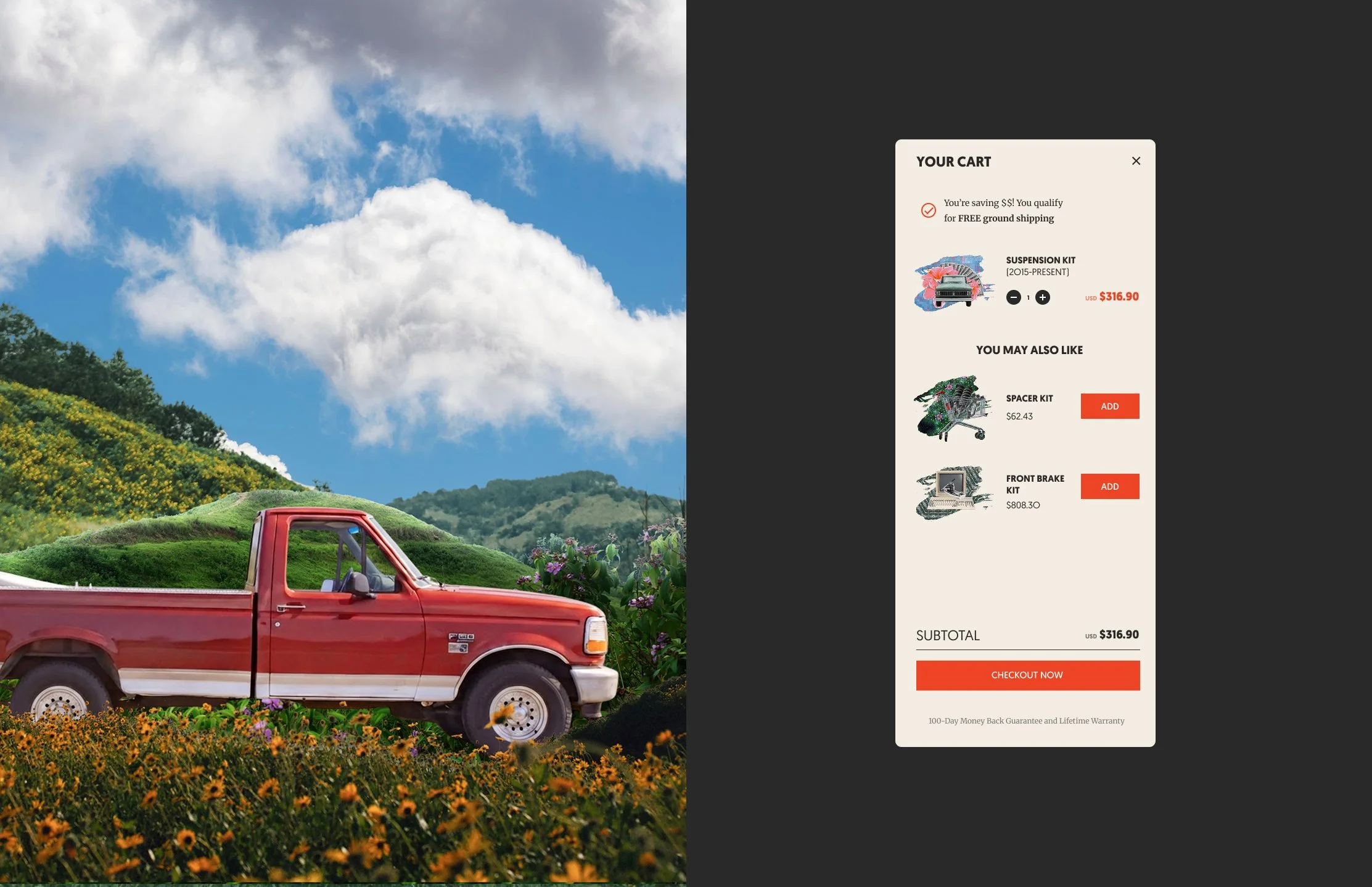
Rebuilt the cart with a smart-cart app and a “Buy This With” block, then wired real-time fitment verification into the one-click upsell so it cannot drop the wrong part in your cart (Apr 2026).

Ran a garage and vehicle-lookup A/B in Q1 2026 (about 30K sessions per variant per week), read it cold, and kept the garage. Locked the country-selector placement.

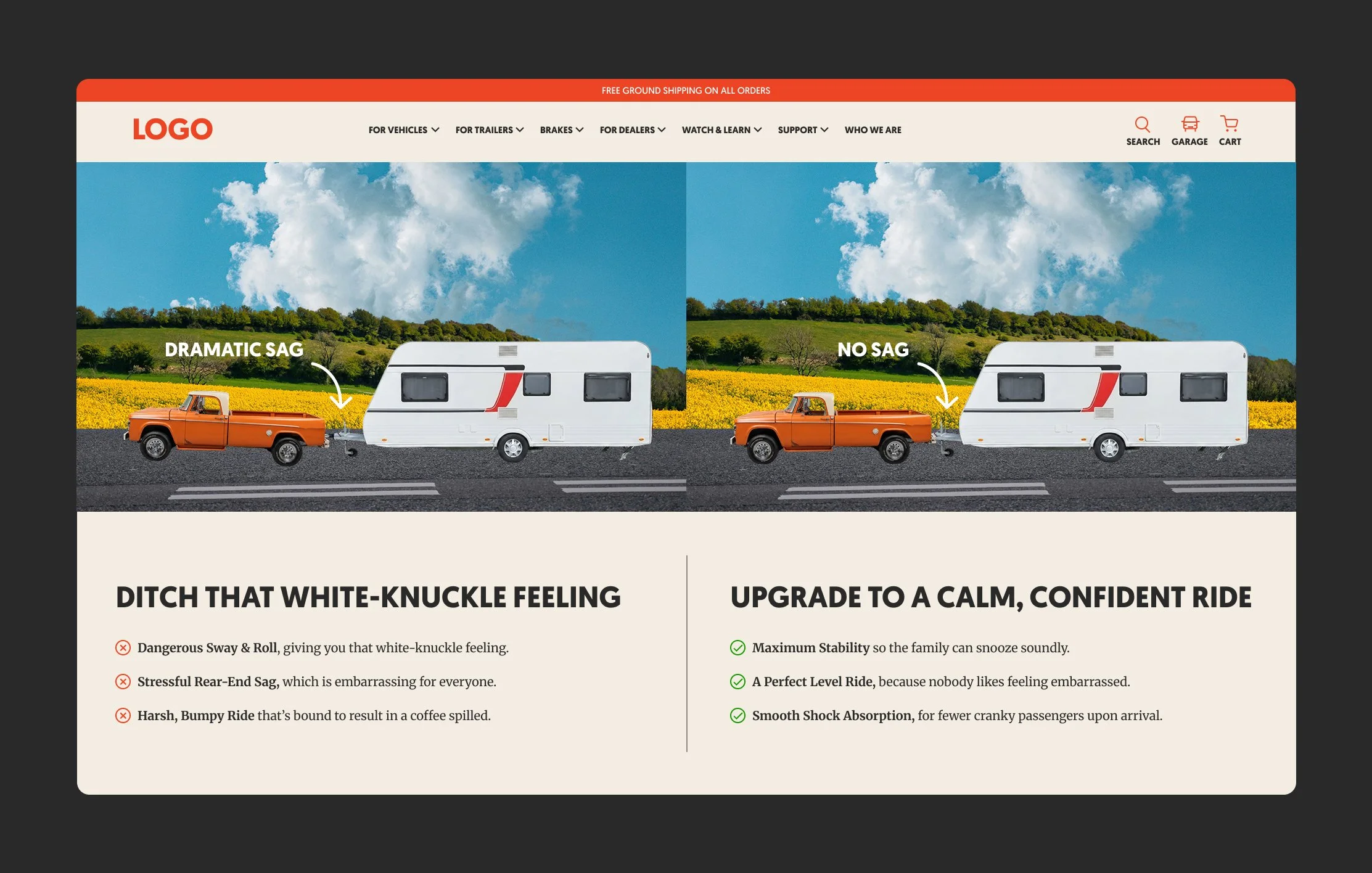
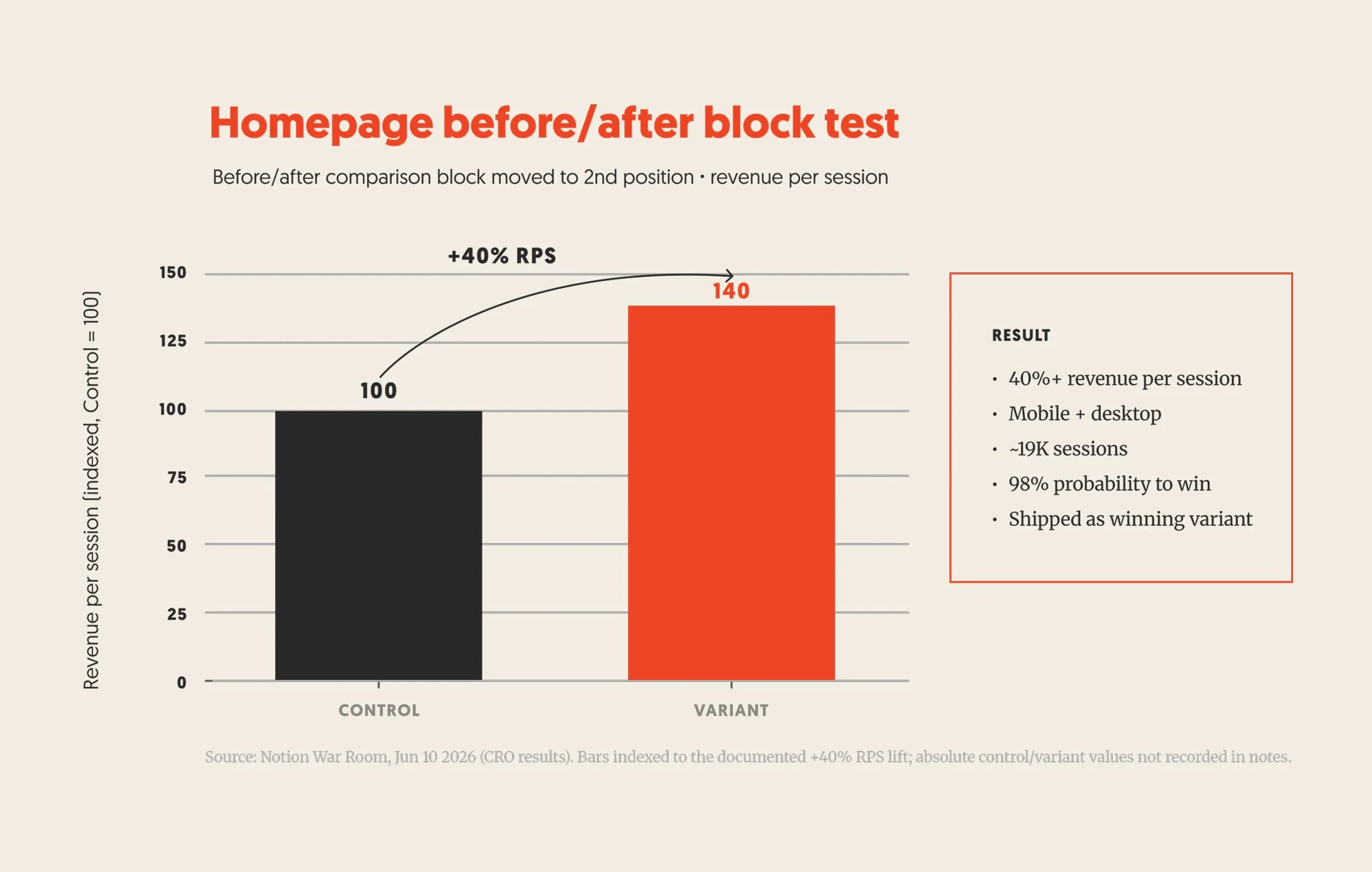
Moved the homepage before/after comparison block to the second slot (June 2026). Revenue per session up 40% plus on mobile and desktop across about 19K sessions, at 98% probability to win. Shipped.

Tested a two-item against a one-item mobile cart upsell (June 2026). The two-item version drove about $50K more revenue at a slightly higher conversion rate. Winner.

The most useful decision was the one we did not make.

We skipped the big-bang redesign the growth arguably earned. Redesigns feel like progress while they quietly torch the evidence of what actually works. So we shipped small, measured everything, and let the losers die quietly. The garage stayed on the strength of the data, and nothing else.

Vintage pickup trucks

 THE RESULTS


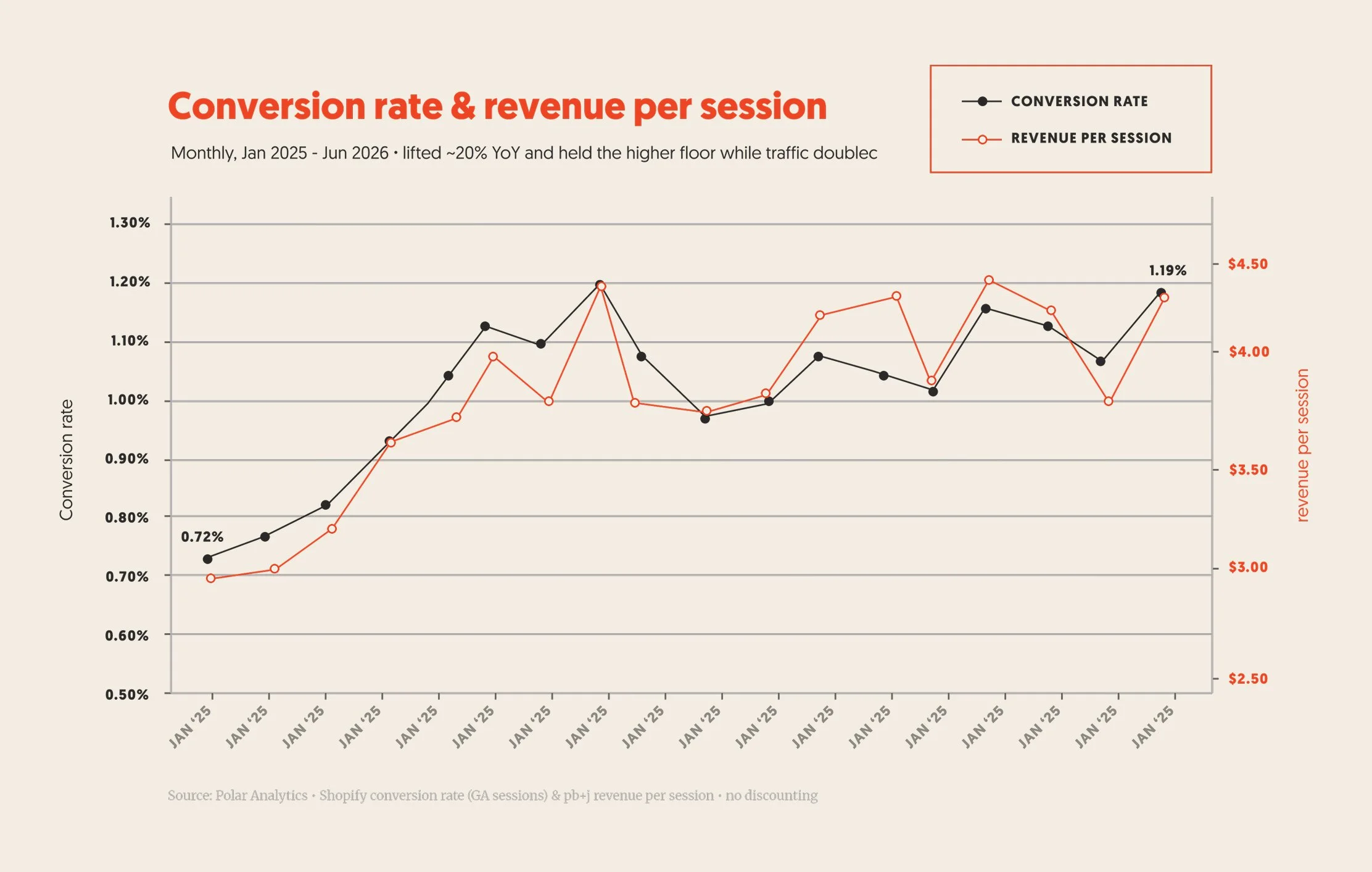
Blended conversion rate rose about 20% year over year, 0.92% to 1.11%. Revenue per session, the number we track for the brand, rose about 20% too, 3.47 to 4.16. Average order value held flat at ~$379 and discounting stayed at zero. Same visit, 20% more money. Pure conversion efficiency, nothing borrowed from price or product mix.


+20%

revenue per session

+20%

conversion rate

Flat AOV

zero discounting

And it held while traffic doubled.

Zoom out and conversion climbed from about 0.72% in January 2025 to a sustained 1.1% plus, and revenue per session from about 2.93 to 4.16, a 42% lift. Holding a higher floor against a rising tide of colder paid traffic is the hard part. That is the part the site pulled off.

The individual wins stacked into that number. The before/after block, up 40% revenue per session on 19K sessions. The two-item cart, about $50K. The free-shipping message, +5% desktop. The same cadence is already pointed at the brand’s new product line.

1) When you scale paid, the site is the multiplier.
Every point of conversion you add makes all of your ad spend work harder at once. CRO is not a cost center. It is leverage on the budget you are already spending.

2) Confidence is the lever, not the coupon.
This brand never discounted. The gains came from making people certain the part fits, through the garage and fitment-verified upsells. Cheaper than a coupon, and it lasts a lot longer.

3) Ship small and let the losers die.
The instinct at 2x growth is the grand redesign. Continuous, measured tests keep the evidence intact and compound on each other. A plateau you can defend beats a spike you cannot explain.

 
A collage of vintage computer with a man in a small paddle boat going into the screen. All of this is on a blue and green dotted background.
 

DOES YOUR DTC SITE NEED A DRESS UP?

Learn more about what we did & how that might help you.